
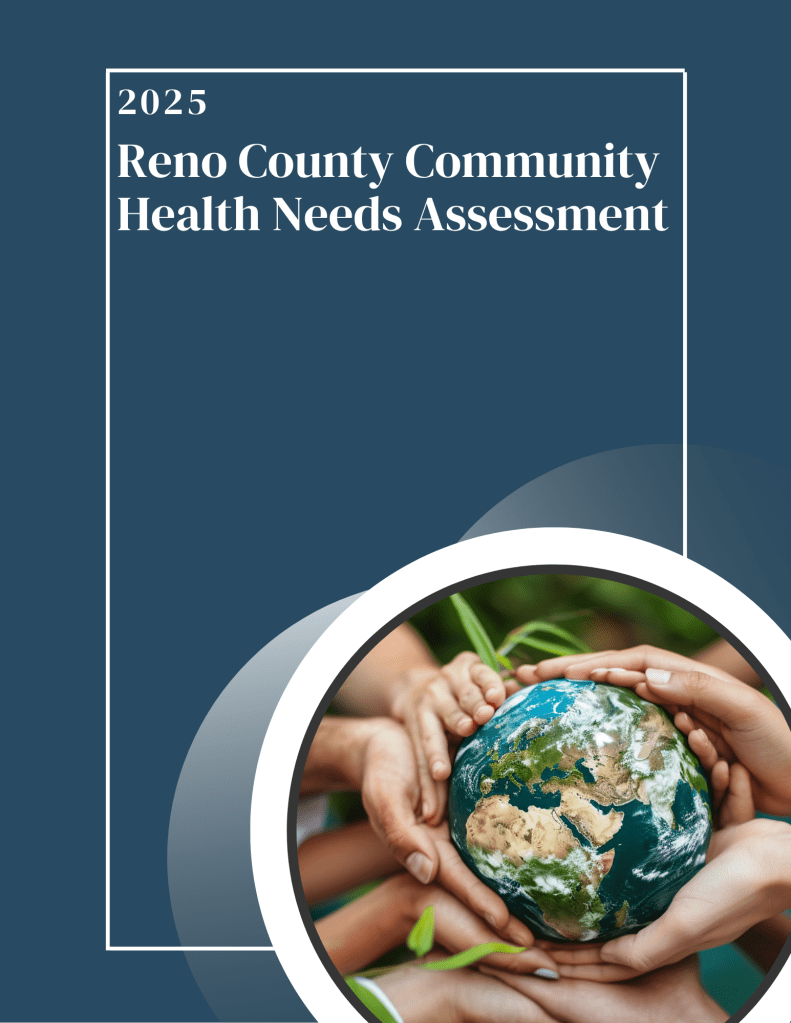
At Gering Geosolutions, we believe that data should drive decisions. It should also be accessible to the public. This is especially important when it comes to community health. An example is the 2025 Reno County Community Health Needs Assessment (CHNA). The assessment helps in understanding these dynamics and aligns with the Kansas Health Assessment initiatives. This assessment offers a comprehensive look at the challenges, disparities, and opportunities shaping public health across Reno County, Kansas.
The interactive webpage is now live at www.renocountycha.org, featuring interactive maps, infographics, and analysis that reveal the most pressing health issues facing local residents. The Reno County, Kansas health assessment process brings vital data to light.
Why Community Health Assessments Matter
Community Health Needs Assessments are essential for understanding what’s impacting residents at the local level. In Reno County, the CHNA is conducted every three years. This meets accreditation standards for the Reno County Health Department and Hutchinson Regional Healthcare System. The CHNA does more than just meet a need, it serves as a roadmap for targeted action, making it a crucial part of the Kansas Health Assessment framework.
This year’s CHNA was a true community effort. It brought together data from:
- Household surveys using a modified CASPER methodology
- Listening sessions with non-profits
- Surveys from partner organizations and people in recovery
- GIS-based analysis and secondary datasets

Key Health Challenges Identified in Reno County
Here are just a few of the findings from the 2025 CHNA:
- Health Disparities: Residents who are low-income, uninsured, disabled, or identified as non-white are more likely to face poor health outcomes. The 67501 zip code continues to rank highest in vulnerability.
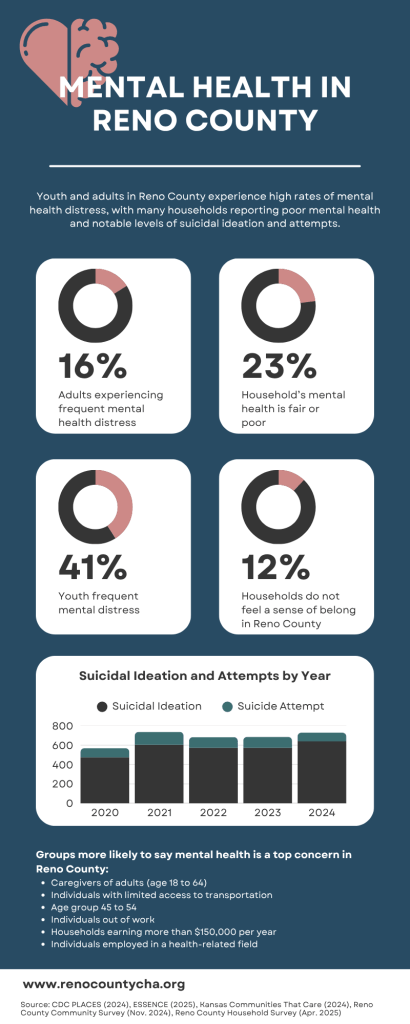
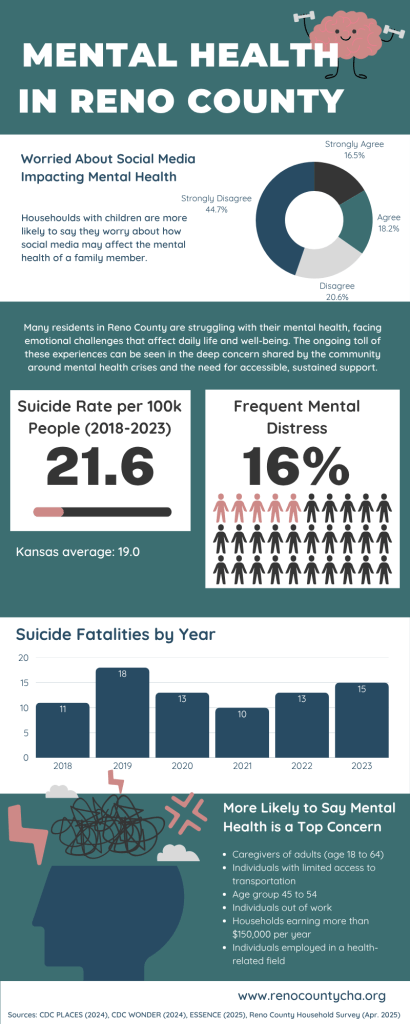
- Behavioral Health & Suicide: Mental health distress is rising, particularly among youth and young girls. Reno County’s suicide rate is higher than the Kansas average at 21.6 per 100,000 people.
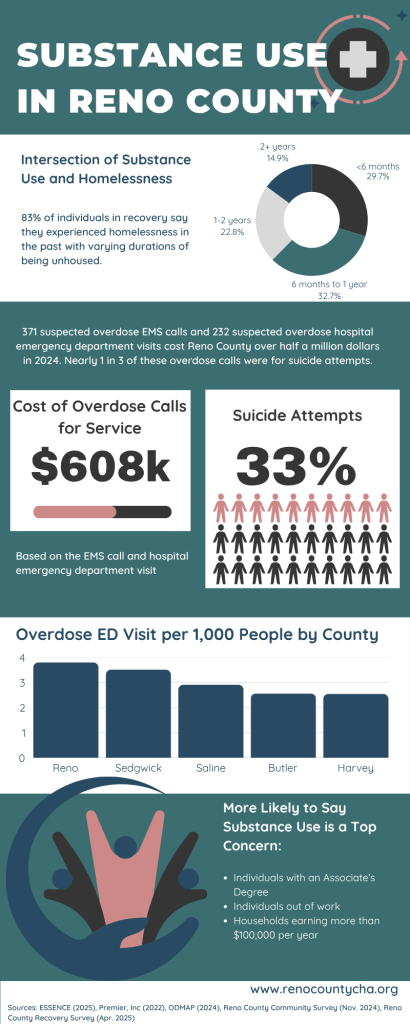
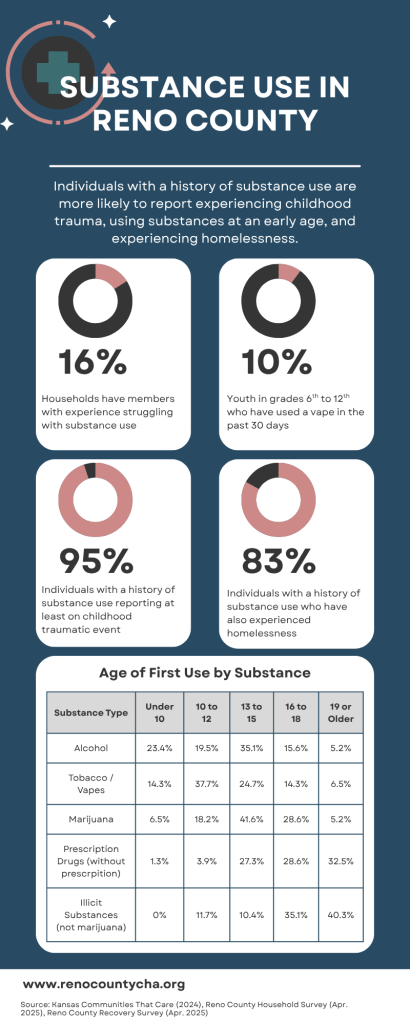
- Substance Use: Methamphetamine remains the leading cause of fatal and non-fatal overdoses. Despite the availability of recovery housing, stigma and barriers for justice-involved individuals hinder long-term recovery.
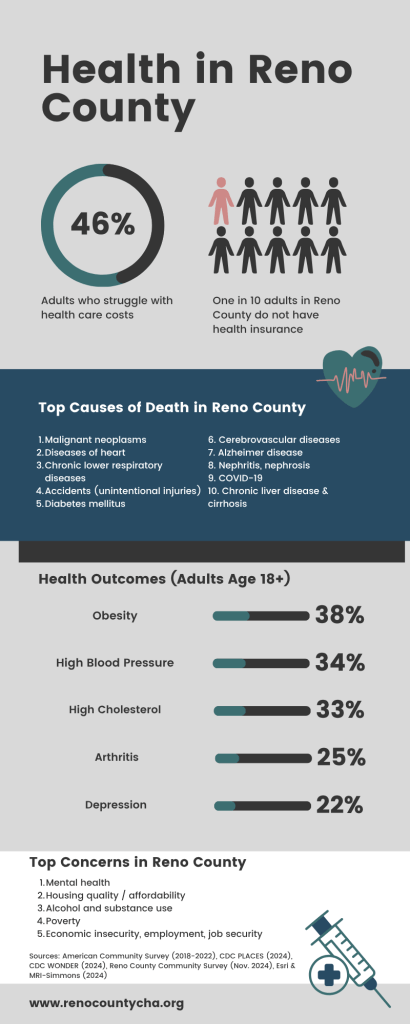
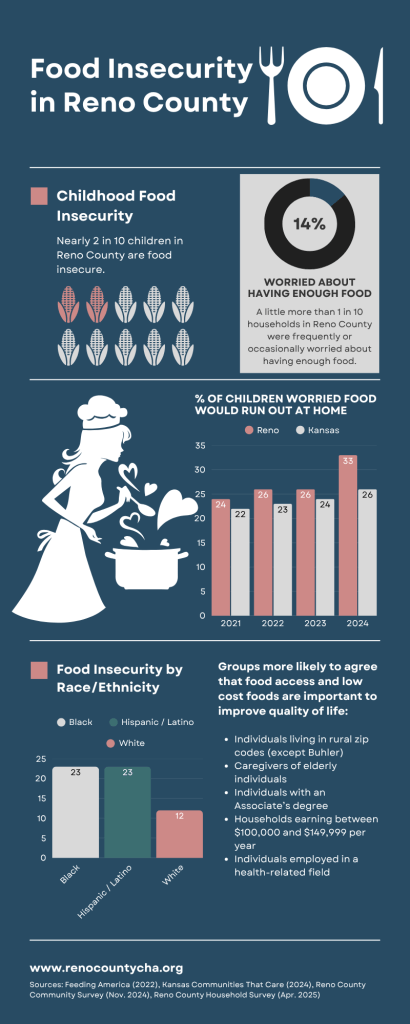
- Food Insecurity: Over 13% of the Reno County residents, nearly 20% of children, live in food-insecure households.
- Access to Care: Transportation, cost, and lack of insurance coverage continue to block access to primary and specialty care. One census tract in Hutchinson has nearly 1 in 5 residents without health insurance.
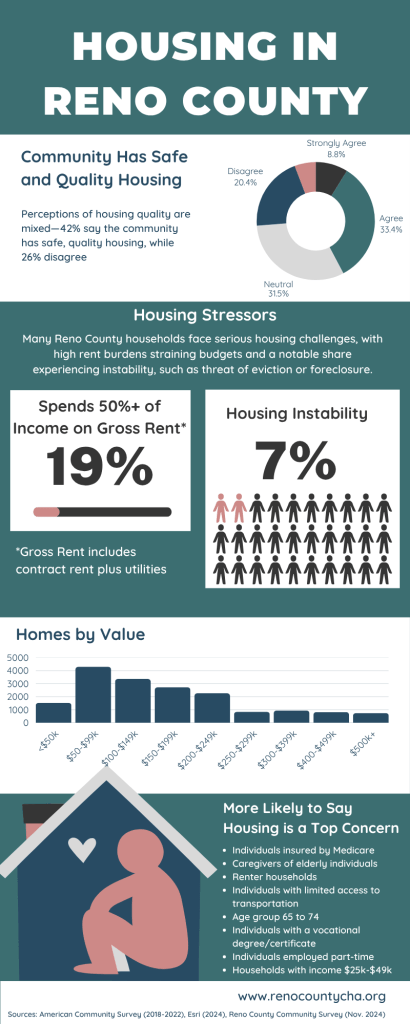

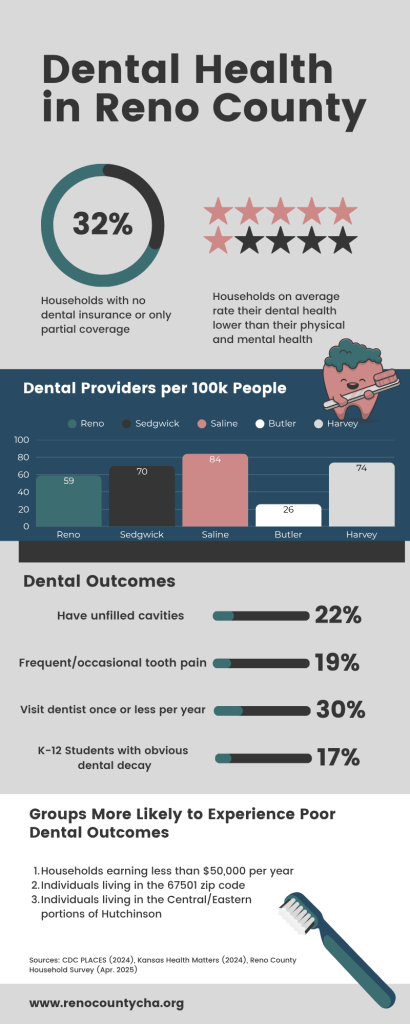
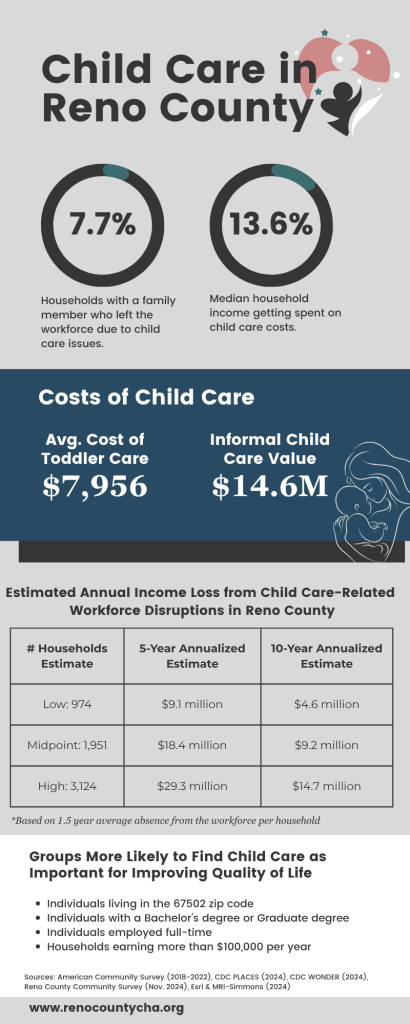
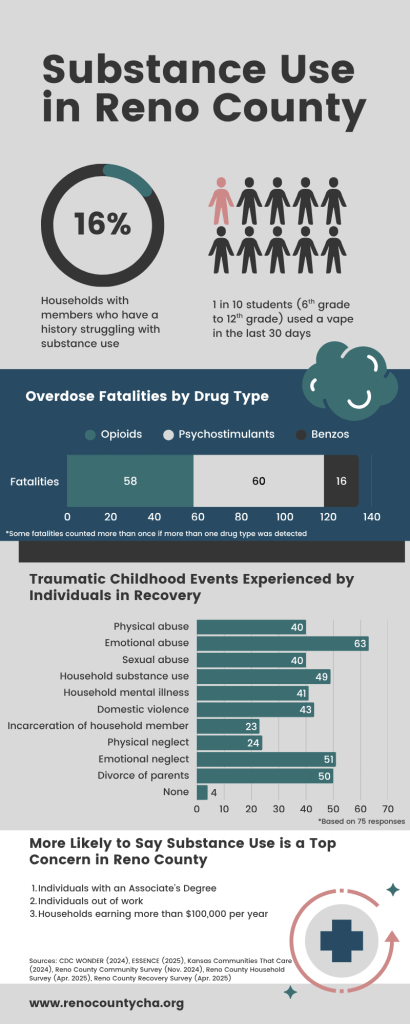
Making Health Data Accessible and Actionable
One of the most exciting aspects of this project is the interactive CHA website developed at www.renocountycha.org. This platform allows users to:
- Explore mapped data by zip code and census tract
- Compare trends across multiple years
- Download full reports and infographics
- Understand community voices through survey and qualitative data
At Gering Geosolutions, we specialize in geospatial analytics, public health strategy, and data storytelling. We turn complex data into tools that empower local leaders and residents alike. This project exemplifies our commitment to community-driven solutions. It also shows our focus on data-informed public health planning, further contributing to Kansas Health Assessment efforts.
Want to Learn More?
Explore the Interactive Webpage
Contact us at dj.gering@geringgeosolutions.com if your organization is ready to put data to work for your community.
Visit the Community Health Needs Assessment page for more information about our CHNA services and Kansas Health Assessment projects.
Leave a Reply